
HVAC Sizing Guide
What size air conditioner, heat pump, or furnace do you need? Size it right with our climate-zone charts, model-number decoder, and a calculator built for hot, humid Florida homes.
Getting the size right is the single most important decision you'll make when you buy an HVAC system. Too small and it runs nonstop and never keeps up. Too big and it short cycles, leaves your home clammy, and wears out early. This guide walks you through sizing an air conditioner, heat pump, or furnace by square footage, climate zone, and the details that actually move the number, then lets you estimate it in seconds with our calculator.
Which type of system do you need?
Estimate your size with the calculator
Pick your system type, enter a few details, and we'll tell you the size to buy. It's tuned for hot, humid Florida homes. Want a second set of eyes? Our team will confirm your size before you order.
How do you size an air conditioner?
Air conditioners and heat pumps are rated in tons of cooling, where one ton equals 12,000 BTU per hour of heat removal. The quick rule of thumb is roughly one ton for every 500 to 600 square feet of conditioned space. The calculator above sharpens that by factoring in your climate, insulation, windows, ceiling height, and household size.
For most Florida homes the rule of thumb and the calculator land on the same size, so you can order with confidence. If your home is unusual, high ceilings, lots of west-facing glass, or an older build, our team will run the numbers with you and make sure you get the right size the first time.
What size AC do you need by climate zone?
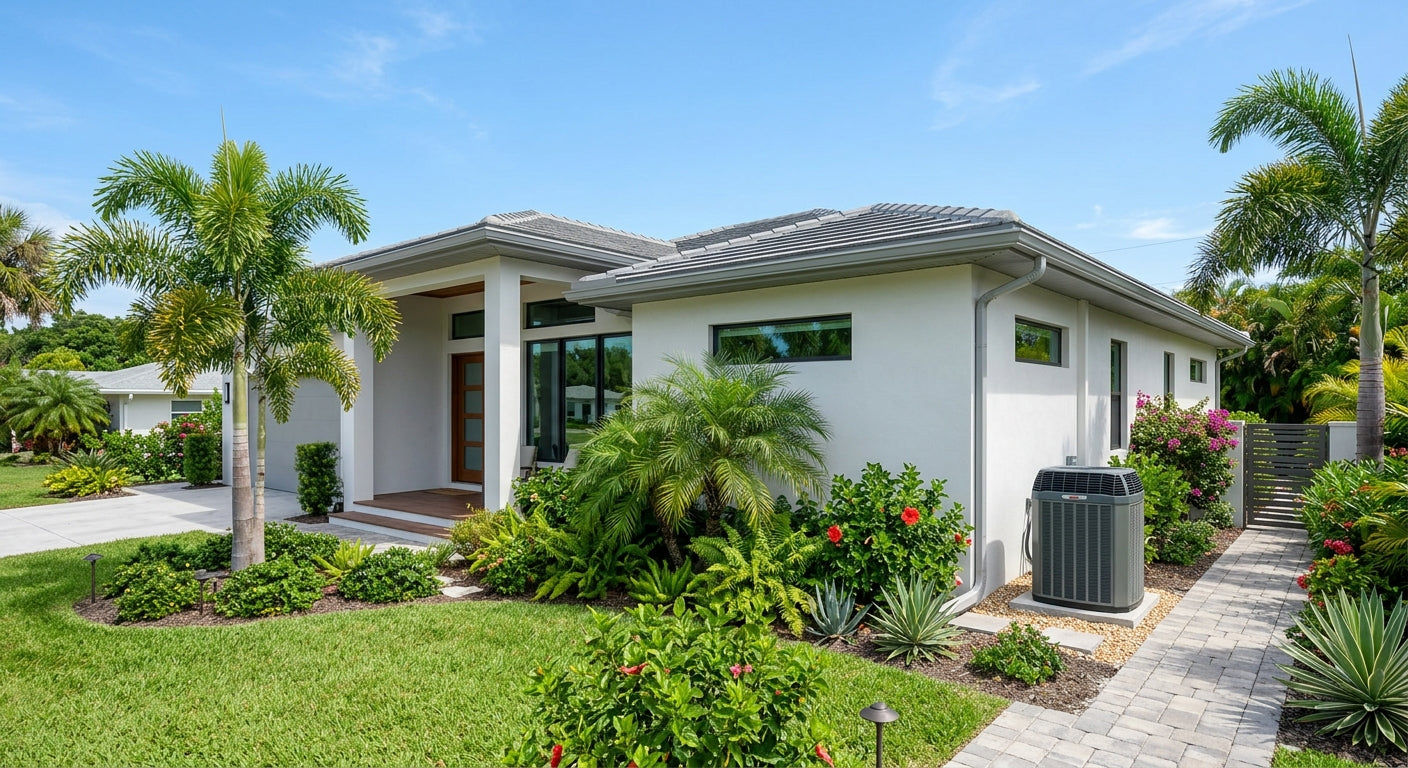
Hotter climates need more cooling per square foot, so the same tonnage covers less area. Florida sits in Zone 1, the hottest and most humid zone, so size on the conservative end of each range. Find your square footage under your zone to get your tonnage.
| Tonnage | Zone 1Hottest (FL) | Zone 2 | Zone 3 | Zone 4 | Zone 5Coldest |
|---|---|---|---|---|---|
| 1.5 Tons | 600–900 | 600–950 | 600–1,000 | 700–1,050 | 700–1,100 |
| 2 Tons | 901–1,200 | 951–1,250 | 1,001–1,300 | 1,051–1,350 | 1,101–1,400 |
| 2.5 Tons | 1,201–1,500 | 1,251–1,550 | 1,301–1,600 | 1,351–1,650 | 1,401–1,700 |
| 3 Tons | 1,501–1,800 | 1,551–1,850 | 1,601–1,900 | 1,651–1,950 | 1,701–2,000 |
| 3.5 Tons | 1,801–2,100 | 1,851–2,150 | 1,901–2,200 | 1,951–2,250 | 2,001–2,300 |
| 4 Tons | 2,101–2,400 | 2,151–2,450 | 2,201–2,500 | 2,251–2,550 | 2,301–2,700 |
| 5 Tons | 2,401–3,000 | 2,451–3,050 | 2,501–3,100 | 2,551–3,300 | 2,701–3,500 |
Square footage ranges are conditioned space. Zone 1 covers South and Central Florida, the Gulf Coast, and the desert Southwest.
How do you find the size of your current system?
The fastest way to size a replacement is to read the model number off the data plate on your outdoor condenser. Manufacturers hide the nominal capacity in the model as a two-digit number between 18 and 60, which is the BTU capacity in thousands. Divide that number by 12 to get tons. For example, a Goodman GLXS4BA3610 has a 36 in it, so it's 36,000 BTU, or 3 tons.
| Number in model | BTU/hr | Tonnage |
|---|---|---|
| 18 | 18,000 | 1.5 Tons |
| 24 | 24,000 | 2 Tons |
| 30 | 30,000 | 2.5 Tons |
| 36 | 36,000 | 3 Tons |
| 42 | 42,000 | 3.5 Tons |
| 48 | 48,000 | 4 Tons |
| 60 | 60,000 | 5 Tons |
If your current system is more than 12 years old, size fresh with the calculator instead of copying it. Older homes were often oversized.
How do you size a furnace or heater?
Furnaces are rated in BTU of heat output, and how many BTU you need per square foot depends on your climate zone. Multiply your square footage by the BTU factor for your zone to get the input you need.
| Climate zone | BTU per sq ft | Example: 2,000 sq ft |
|---|---|---|
| Zone 1 (Hottest, FL) | 30–35 | 60,000–70,000 BTU |
| Zone 2 | 35–40 | 70,000–80,000 BTU |
| Zone 3 | 40–45 | 80,000–90,000 BTU |
| Zone 4 | 45–50 | 90,000–100,000 BTU |
| Zone 5 (Coldest) | 50–60 | 100,000–120,000 BTU |
One thing that trips people up: furnace efficiency (AFUE) changes how much of that input actually heats your home. An 80% AFUE furnace rated at 60,000 BTU input delivers about 48,000 BTU of usable heat. A 96% AFUE furnace at the same input delivers about 57,600 BTU and burns far less gas doing it. In Florida most homes lean on the heat pump and only need modest backup heat, so don't overspend on a huge furnace you'll rarely run.
What else affects the size you need?
Adds to your load
- High or vaulted ceilings (more air volume to cool)
- Lots of windows, especially west and south facing
- Single-pane or older windows
- Poor or missing insulation
- A busy kitchen (add about 1,200 BTU)
- More occupants (add about 380 to 600 BTU per person)
Reduces your load
- Good attic and wall insulation
- Double-pane, low-E windows
- Shade trees and awnings
- Reflective or light-colored roofing
- Tight, well-sealed construction
- A single-story footprint
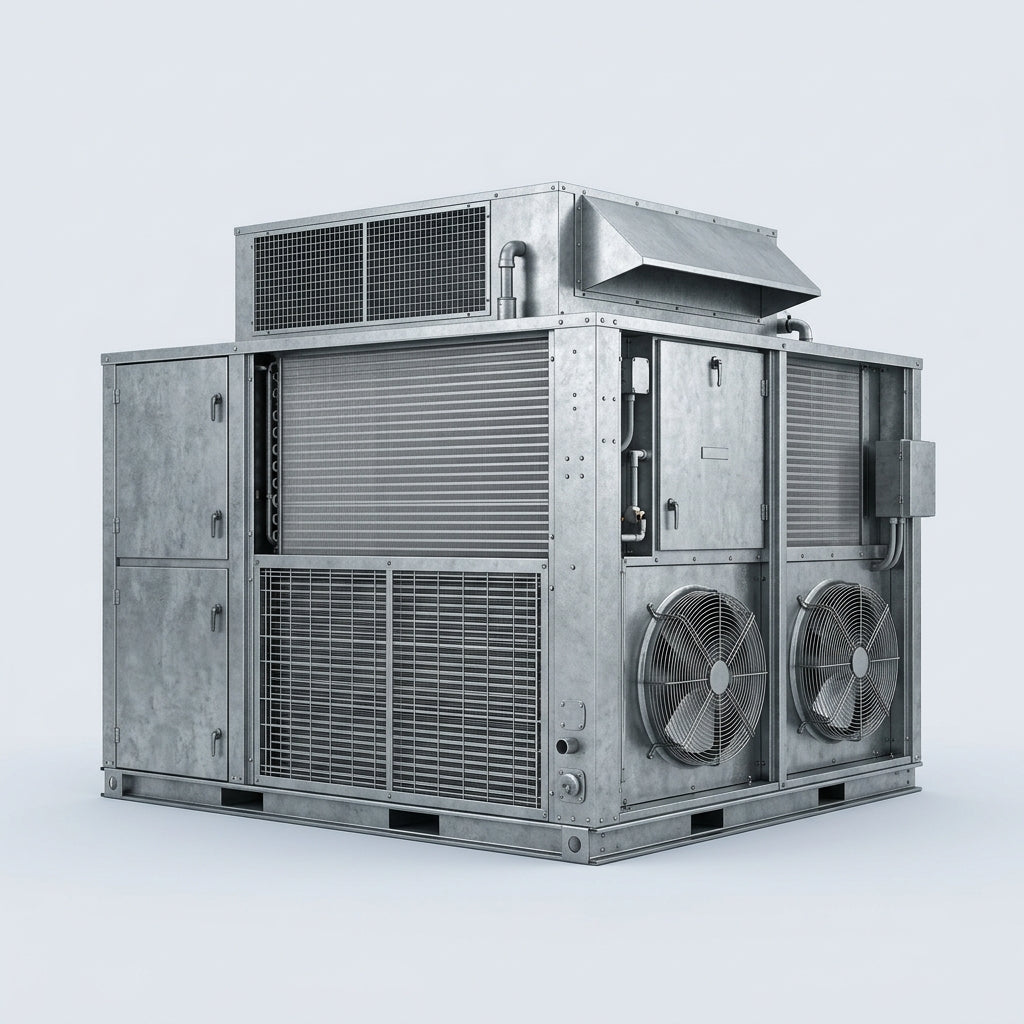
How do you size a commercial or packaged unit?
Light commercial spaces use a simple load formula, then add for the extras inside the space:
- Start with base cooling: square footage ÷ 500 × 12,000 BTU
- Add 380 BTU per person who works in the space
- Add 1,000 BTU per window
- Add 1,200 BTU per kitchen or heat-producing area
So a 5,000 sq ft space with 20 people, 15 windows, and one kitchen needs roughly 120,000 base + 7,600 + 15,000 + 1,200, about 143,800 BTU, or a 12.5 ton system. Round up to the next available size, and for anything over 5 tons our team will spec the system with you.
Why is a bigger AC not better?
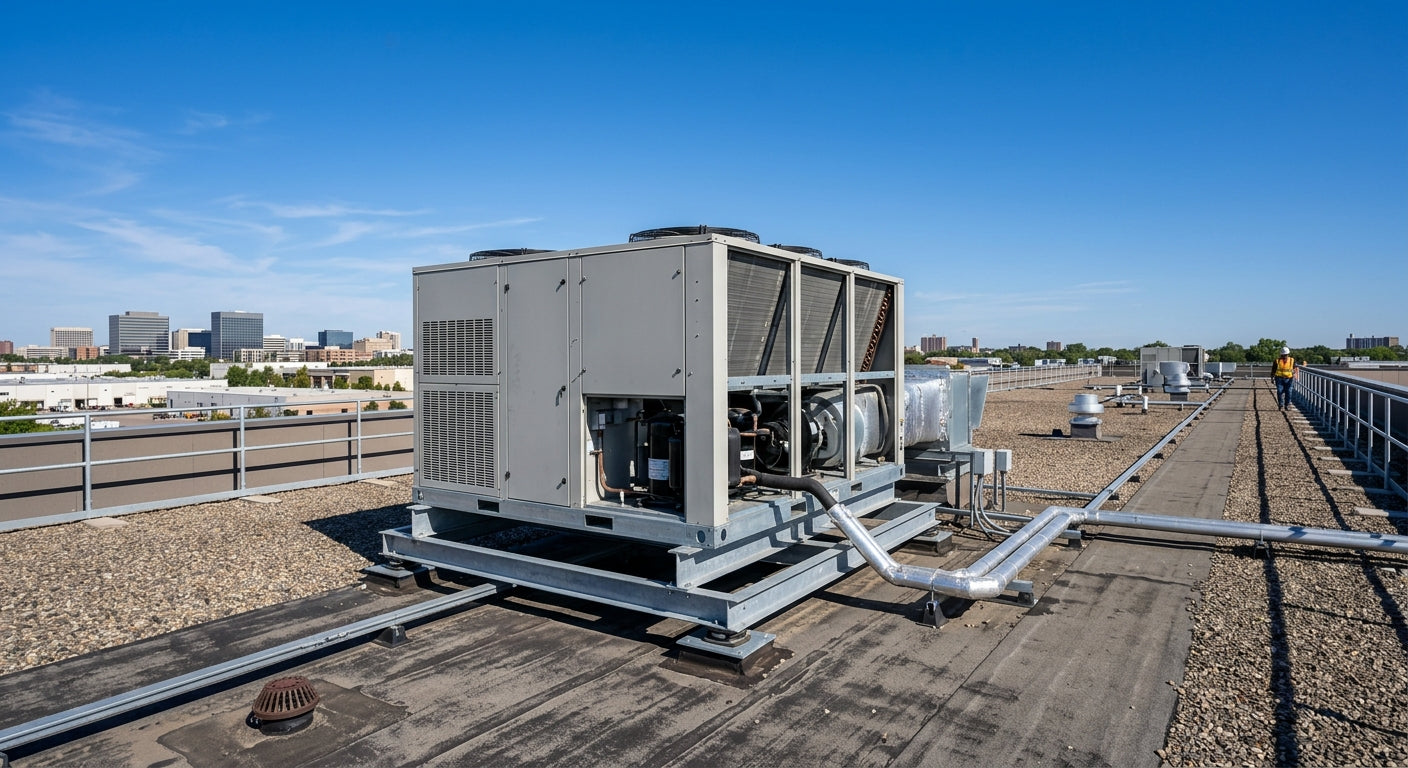
This is the mistake we see most, especially in Florida. An oversized air conditioner cools the air fast, hits the thermostat setpoint, and shuts off before it has run long enough to pull moisture out of the air. That's called short cycling. You end up with a house that feels cold and clammy, higher humidity, more mold risk, and a compressor that wears out years early from constant stopping and starting.
In our climate, dehumidification matters as much as temperature. A right-sized system runs longer, gentler cycles that keep both the temperature and the humidity where you want them. When in doubt, size it correctly, not big.
HVAC sizing FAQ
What size air conditioner do I need for a 2,000 sq ft house?
In Florida (Zone 1), a 2,000 square foot home typically needs a 3.5 to 4 ton system. Cooler climates can use closer to 3.5 tons. Confirm with the calculator above, since insulation, ceiling height, and window count can shift it half a ton either way.
How many square feet does a 3 ton AC cool?
A 3 ton (36,000 BTU) air conditioner cools roughly 1,500 to 1,800 square feet in a hot climate like Florida, and up to about 2,000 square feet in cooler zones.
Is it better to oversize or undersize an AC?
Neither. An oversized unit short cycles and leaves your home humid. An undersized unit runs constantly and never keeps up. Size it correctly for long, steady cycles that control both temperature and humidity.
How do I tell what size my current AC is?
Read the model number on your outdoor condenser and find the two-digit number between 18 and 60. That number times 1,000 is the BTU capacity, and dividing by 12 gives you the tons. For example, 36 equals 36,000 BTU equals 3 tons.
What SEER2 rating do I need in Florida?
The federal minimum for the Southeast is 14.3 SEER2 on new split-system air conditioners. Higher SEER2 costs more upfront but lowers your cooling bills, which pays off fast in a long Florida cooling season.
Can I put a bigger air conditioner on my existing ductwork?
Not always. Ductwork is sized for a specific airflow. Jumping up in tonnage without checking the ducts causes poor airflow, noise, and comfort problems. Have the duct sizing verified before you upsize.
Does ceiling height change the AC size I need?
Yes. Cooling load is about air volume, not just floor area. Ceilings above the standard 8 feet add to the load, so a room with vaulted ceilings needs more capacity than its square footage alone suggests.
Know your size? Shop wholesale.
Match the right condenser and air handler and buy direct at wholesale pricing.